
Notes On The Middle Path
Family Medicine, The Rambam, and Ragamuffin Stew

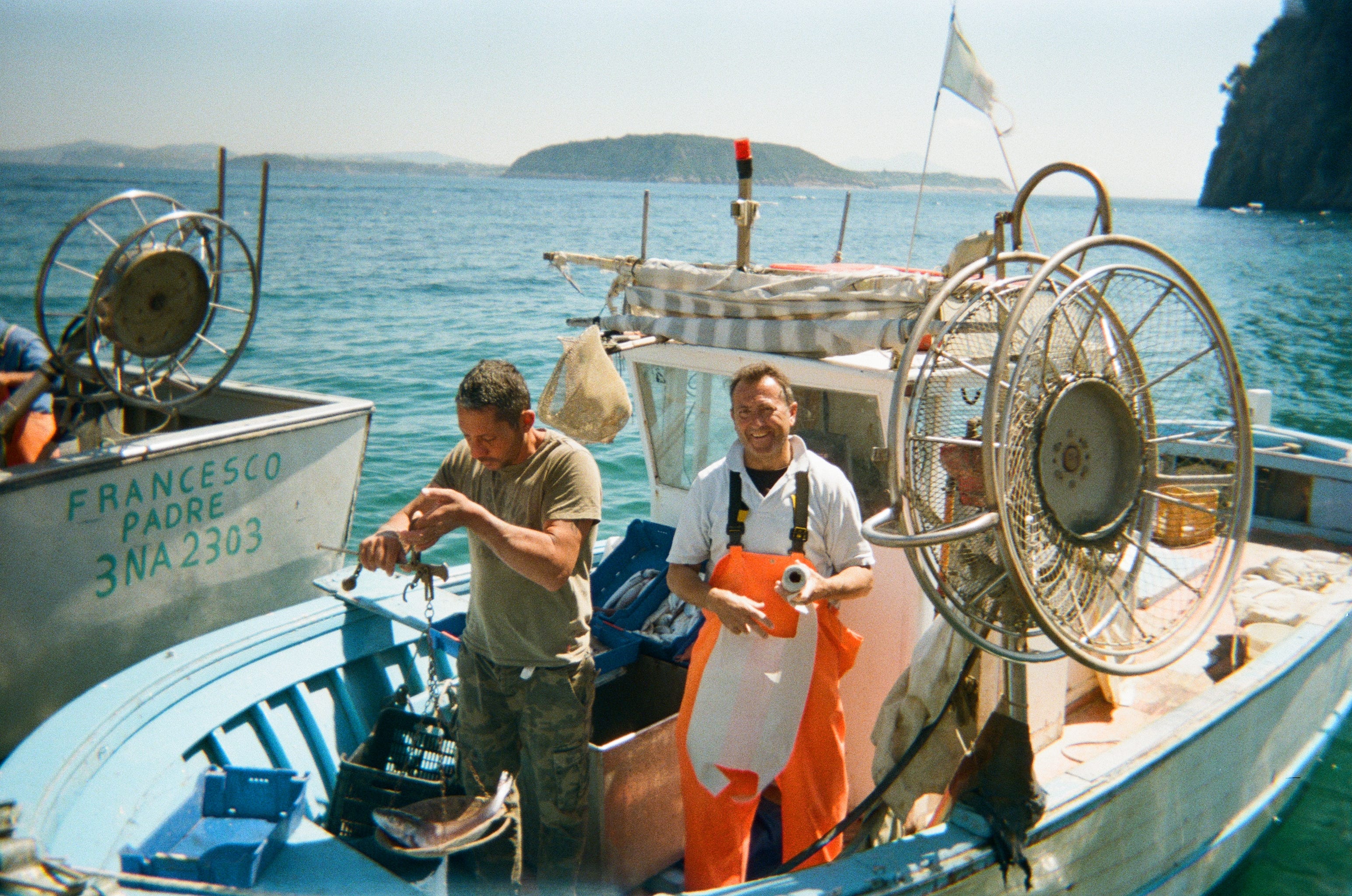
© Photo by Georgia
The Rambam’s theory of character, developed in the Mishneh Torah, is often called the doctrine of the golden mean. A person, he writes, should generally avoid extremes and instead follow the middle path. One should be neither miserly nor extravagant, neither quick to anger nor indifferent, neither arrogant nor self-effacing. Virtue lies in balance.
Although the Rambam grounds this teaching in Torah, he was also heir to older philosophical traditions, especially Aristotle, whose ethics likewise located virtue between extremes. Similar ideas emerged elsewhere in the ancient world. Confucius spoke of the “Doctrine of the Mean” as the path of harmony and right conduct. Across centuries and civilizations, thinkers arrived at a similar insight: human flourishing often lies not at the extremes but somewhere in the middle.
Family medicine reflects something of this ideal.
Specialists go deep. Family physicians go broad. The family physician begins not with the question, “What do I know how to do?” but with the question, “What does this patient need?” Those are not always the same thing. As the saying goes, to a hammer everything looks like a nail. The danger is not expertise itself, but the temptation to see every problem through the lens of one’s expertise—and to turn away from problems that seem to fall outside it.
Family medicine asks for a different approach. The goal is to be broad enough to serve whatever a patient or community needs, and adaptable enough to meet needs that no one saw coming.
In one setting—like the Zuni reservation in New Mexico, where Rachel and I once did a visiting rotation—the work may be diabetes, hypertension, and renal failure. In another, like our home town of New York, it may suddenly become Covid—and, in its aftermath, adolescent mental health.
Some patients can be cured. A 58-year-old man came in the other day with fever, cough, and a lung infection that had left him exhausted and short of breath. He needed a diagnosis, symptomatic treatment, and ten days of amoxicillin-clavulanate. A week and a half later, he was better.
A different patient was a 92-year-old woman in assisted living with multiple chronic illnesses, none of them curable. She complained of constipation. The easy response would have been another medication. She did receive Miralax. But after a little investigation, it became clear that what she needed even more was movement and company: to walk outside, leave her room, and spend time with other people.
Doctors are often accused of having a God complex. But family medicine also requires the humility not of the savior, but of the guide. The idea that there should be no patient so far outside our expertise that there is nothing we can do carries a necessary corollary: that we cannot do everything, or always fix the problem even when we know what it is.
The middle path, in other words, can mean more than moderation. It can mean amelioration, or even harm reduction, in the absence of a cure—not letting the perfect be the enemy of the good.
Here’s a poem by Freya Manfred that says it better than I can:
Grandma Shorba’s Ragamuffin Stew
During World War II, Grandma Shorba
handed plates of bread and meat to strangers
who asked for work in exchange for food.
After chopping wood and mending fences,
the lean, stoop-shouldered men went on their way.
“May God watch over them,” Grandma said.I was glad I didn’t have to follow them
down the long train tracks silvering west.
I didn’t want to sleep beside a strange campfire
around the bend, in the next world.But I worried how they’d survive, and asked
my parents if they could live with us.
My begging only made everyone nervous.
Maybe Grandma’s stories of The Good Samaritan
and the Loaves and Fishes weren’t true?If I’d been in charge, I’d have asked those men to stay—
but Gramma, who trusted God,
fed them, then sent them on their way.
Family medicine lives in the middle path because it learns to respect partial goods. The broadness you describe is a form of expertise of its own: the willingness to stay useful when a problem does not fit one clean solution.
The 92-year-old with constipation shows why. The Miralax mattered, but the walk outside and the company were just as much the treatment: part of seeing the illness at the scale she was actually living it.
The humility of the guide is different from the humility of the technician. It is the humility of someone who knows the medicine and also knows when the best medical act is not the most medical-looking one.
Beautiful observations, Bertie, coming from a beautiful heart and deep knowledge. Thank you for sharing this.